Amazon DynamoDB introduces native vector search capabilities to revolutionize serverless data architecture

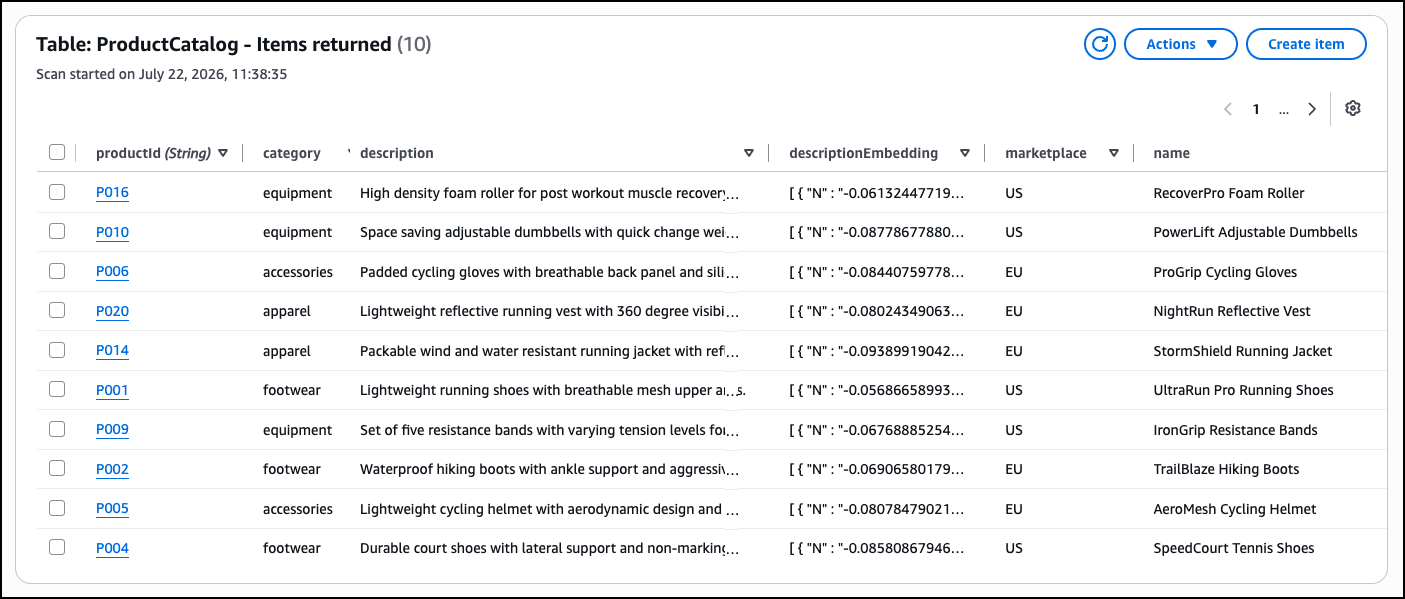
The landscape of modern cloud database management shifted significantly today as Amazon Web Services (AWS) announced the general availability of native vector search within Amazon DynamoDB. This development marks a pivotal transition for developers who have historically struggled to bridge the gap between operational NoSQL data and the high-dimensional requirements of generative AI and machine learning applications. By enabling vector embeddings to reside alongside standard operational data within the same table structure, AWS is effectively eliminating the need for complex, multi-database synchronization pipelines, thereby streamlining the architecture for agentic memory, retrieval-augmented generation (RAG), and sophisticated recommendation engines.
The Evolution of Database Architecture and Vector Integration
For years, the rise of artificial intelligence has placed immense pressure on traditional database systems. As organizations rushed to implement semantic search and LLM-powered applications, the standard industry practice involved a "dual-store" approach. Developers would store primary records in a fast NoSQL database like DynamoDB while simultaneously shipping copies of that data—transformed into vector embeddings—to a dedicated vector database.

This architecture, while functional, introduced significant operational friction. The necessity of maintaining synchronization pipelines meant that data consistency was often challenged, latency could fluctuate due to cross-service communication, and costs were inflated by the overhead of managing two distinct infrastructure stacks. The introduction of native vector search into DynamoDB addresses these pain points by embedding the functionality directly into the existing serverless, pay-per-request infrastructure. This integration allows for single-digit millisecond latency at 99%+ recall rates, a threshold that remains the "gold standard" for real-time AI performance.
A New Paradigm for Scalable AI Memory
The technical implementation of this feature leverages a new index type within DynamoDB. When developers generate embeddings—using industry-standard models such as Amazon Bedrock Titan, Cohere Embed, or OpenAI text embeddings—they can now store these high-dimensional arrays as lists of floats within their existing items. This process requires no schema migration, as DynamoDB utilizes its established List data type to house the vectors.
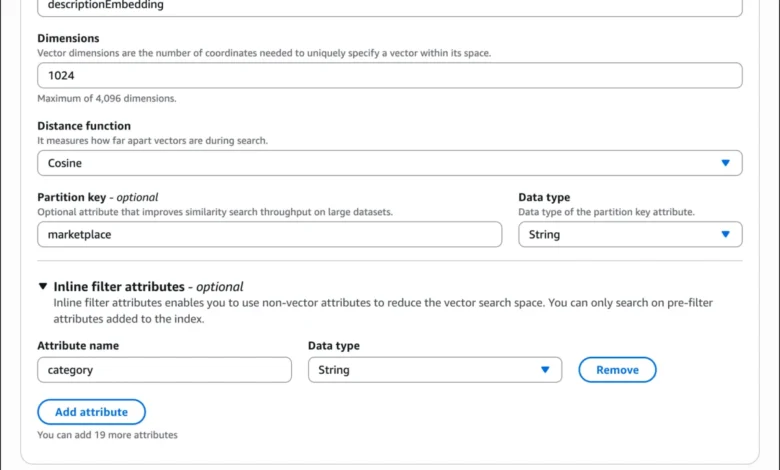
The architectural implications for scalability are profound. Because DynamoDB is a fully serverless service, the vector indexes created under this new paradigm are designed to scale horizontally without manual provisioning. Whether an application manages a modest product catalog or a global system tracking trillions of vectors, the infrastructure automatically handles the distribution. Furthermore, by utilizing a partition key for the vector index, developers can restrict searches to specific subsets of their data—such as a specific geographic marketplace or product category—thereby optimizing search speed and precision.

Chronology of Development and Market Response
The journey toward this release follows an accelerated timeline reflecting the urgency of the AI market. Throughout late 2023 and early 2024, AWS customers increasingly signaled a demand for "simplified AI stacks." The complexity of managing separate vector stores became a frequent topic in AWS re:Post forums and during major industry summits. By mid-2024, the internal roadmap for DynamoDB was adjusted to prioritize this integration, culminating in the beta testing phases that preceded today’s general availability announcement.
Industry analysts have noted that this move aligns with a broader industry trend of "convergence." Rather than forcing developers to adopt specialized tools for every niche requirement, major cloud providers are opting to evolve general-purpose databases into "all-in-one" solutions. This reduces the "cognitive load" on software engineers, who can now rely on a single API—the new SearchVectors function—to perform both transactional CRUD operations and complex semantic similarity queries.
Data-Driven Advantages and Technical Specifications
The technical specifications of the new feature demonstrate a focus on enterprise-grade performance. The service supports up to 4,096 dimensions, accommodating the output of most modern transformer-based models. It also offers three primary distance functions: Euclidean, Cosine, and Dot product.
- Cosine Distance: Ideal for semantic text comparison, measuring the orientation of vectors regardless of their magnitude.
- Euclidean Distance: Effective for applications requiring strict spatial proximity measurements.
- Dot Product: Suited for specific recommendation algorithms where the magnitude of the vector provides meaningful signal.
A critical component of this release is the support for "inline filtering." In many legacy vector implementations, developers had to perform a "post-search filter," which often resulted in retrieving an insufficient number of results if the filter was too restrictive. With DynamoDB’s native approach, filtering is integrated directly into the query execution, allowing users to combine non-vector metadata (such as category, price ranges, or status) with the semantic search in a single pass.
Implications for the Developer Ecosystem
For the enterprise, the transition to native vector search carries several immediate benefits. First, the reduction in data movement translates to lower egress costs and decreased latency, as data does not need to traverse network boundaries between a database and a vector search engine. Second, the administrative burden is minimized; because there are no servers to patch or maintenance windows to manage, engineering teams can reallocate time from infrastructure maintenance to feature development.
Furthermore, the introduction of this feature is expected to accelerate the adoption of "agentic" applications. As AI agents require persistent, long-term memory to function effectively, the ability to store and retrieve contextual information directly within a high-performance transactional database provides a stable foundation for complex decision-making loops.

Official Guidance and Future Availability
AWS has confirmed that vector search in DynamoDB is available across all commercial regions, including AWS GovCloud (US), ensuring that even highly regulated industries can leverage these capabilities. To assist in the transition, the company has released updated developer documentation and integration support for infrastructure-as-code tools like AWS CloudFormation.
The guidance provided by the AWS engineering team emphasizes that this feature is best utilized when an application’s operational data already resides within the DynamoDB ecosystem. While specialized vector databases may still offer niche features for specific academic or high-research use cases, the majority of business applications—ranging from e-commerce product discovery to personalized content recommendation—now have a more efficient, cost-effective path toward integrating generative AI.
As organizations continue to navigate the complexities of the AI era, the ability to maintain a unified, serverless data layer will likely become a competitive differentiator. By bringing the power of similarity search into the heart of the world’s most widely used managed NoSQL database, AWS has provided a clear signal that the future of data management is not just about storage, but about making that storage inherently intelligent. Developers are encouraged to monitor the official AWS re:Post tags for ongoing updates and community-driven best practices as they begin to integrate these vector capabilities into their production environments.
Related posts: